Introduction
Offering students seeking degrees credit for prior learning (CPL) dates back to World War 2, when schools took into consideration the skills service members and veterans picked up on the job. This was expanded to civilian work-related education CPLs being granted starting in the 1970s.
Today, CPLs are accepted by a majority of schools. According to AACRAO, 79% of colleges in the U.S. offer one or more prior learning assessment options to students.
They’re also extremely effective as a carrot to bring students to higher education. According to RAND, between 32% – 43% of certificate earners are re-enrolling in college to stack credentials. Meanwhile, a UPCEA survey reveals 76% of students would be more interested in getting an undergraduate degree if microcredentials could stack towards larger credentials.
UPCEA also found 71% of higher education leaders believe alternative credentials will help achieve institutional revenue and enrollment goals.
There’s no question that both students and educators benefit from CPL programs. What MedCerts wanted to know is how the alumni of online allied healthcare and IT certification training programs specifically feel about using CPLs to pursue a degree. To answer that question, MedCerts polled 382 former MedCerts students via email between November 6, 2024, and December 16, 2025.
CPL Options Available Through MedCerts
MedCerts provides innovative, online career training programs that prepare adult learners for in-demand roles in healthcare and IT. With interactive eLearning, expert instruction and strong industry partnerships, MedCerts has helped over 100,000 students gain the skills and certifications needed for career success. Through MedCerts Partner Solutions, MedCerts collaborates with employers, higher education institutions, and workforce agencies to address talent shortages and build scalable credential pathways that bridge education and employment while also offering Credit for Prior Learning (CPL) that could give learners flexible on- and off-ramps between skill-based training and continued education.
Current academic partners that collaborate with MedCerts to recognize industry certifications through Credit for Prior Learning (CPL) pathways toward degree programs include Indiana Tech, Franklin University, Strayer University, University of Phoenix, American College of Education and Trine University.
Depending on the institution, students may be eligible to receive up to 30 credits through Credit for Prior Learning (CPL) upon completing a MedCerts certification training program. Those credits can be applied to either 2-year or 4-year degrees, giving MedCerts alumni a head start on getting their associate’s or undergraduate degree.
The Alumni Survey Results
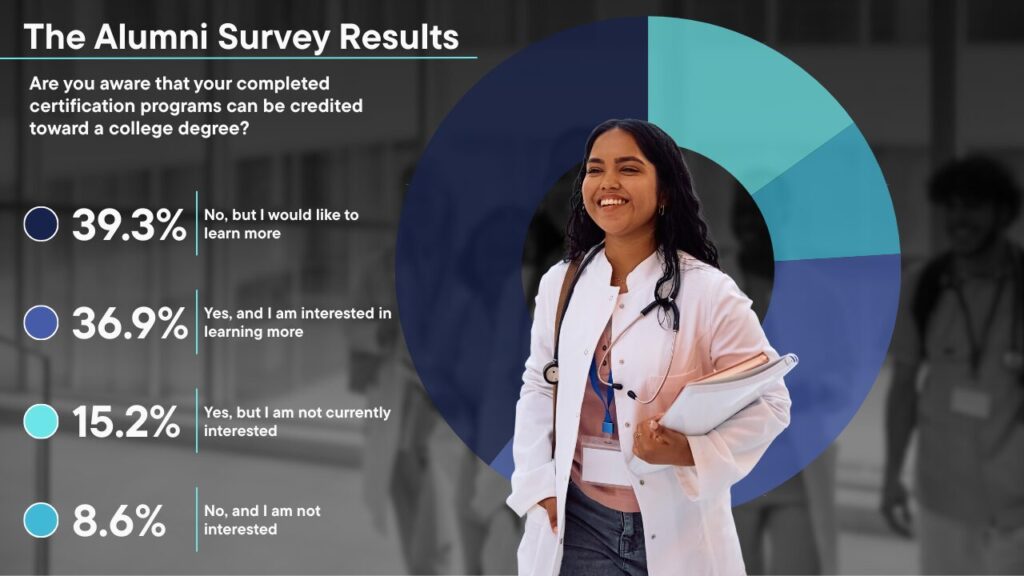
While 47.9% of those surveyed weren’t aware that their MedCerts experience can be used as CPL at specific colleges and universities, overall 76.2% of respondents were interested in learning more. That includes 39.3% who hadn’t been aware of the possibility and 36.9% who had but want more details.
Low awareness is consistently the biggest challenge in getting prospective students to take advantage of CPL opportunities. For example, a Harris Poll commissioned by MedCerts’ partner University of Phoenix found 45% of employed Americans do not believe work experience can count toward a degree.
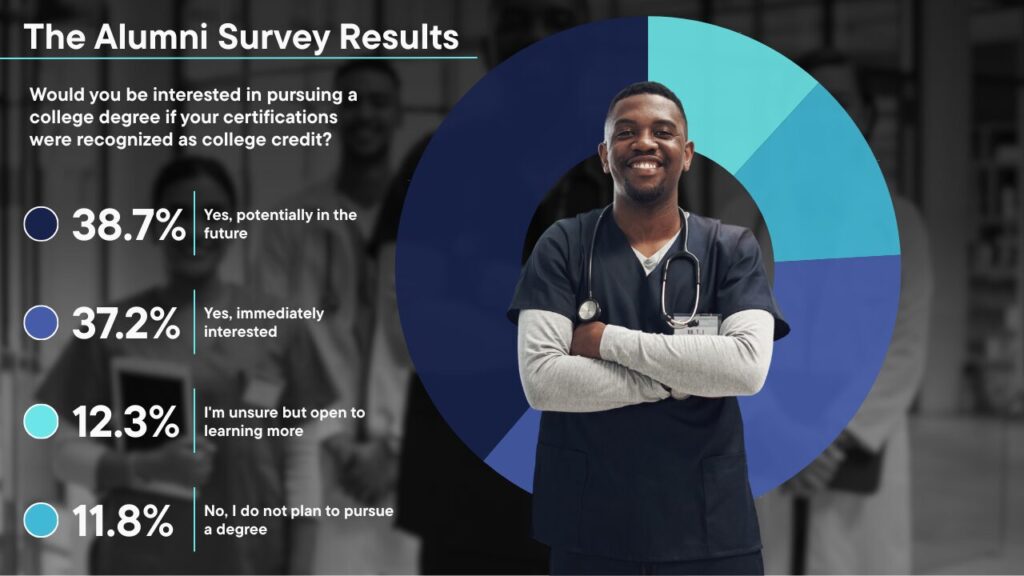
When asked directly if they’d be interested in pursuing a college degree if their certifications were recognized as college credit, 37.2% of respondents said they’d be immediately interested, 38.7% said they’d be interested potentially in the future, while 12.3% were unsure, but open to learning more. Only 11.8% of respondents conclusively had no plans to pursue a degree in the future.
The majority of students training for a career in allied healthcare or IT don’t see certification as inherently the end of their educational journey. They’re very open to continuing their education at college or university, especially if their MedCerts education can shorten their path to getting a related degree.
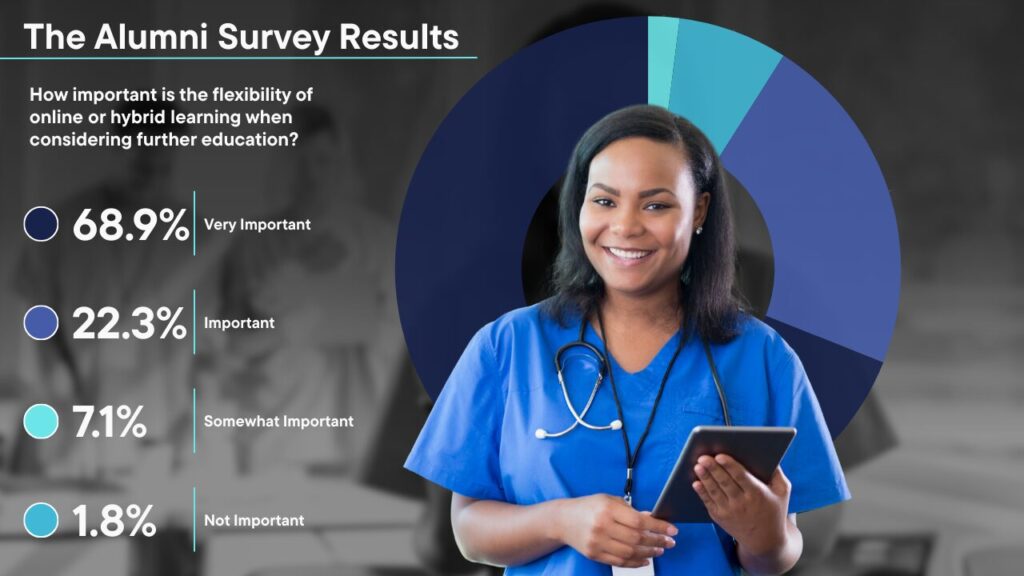
When offering MedCerts alumni an opportunity for further education, this is an audience where the flexibility of online or hybrid learning is essential. 68.9% of those surveyed said online or hybrid learning is very important to them, 22.3% listed it as important and 7.1% responded somewhat important.
Only 1.8% of respondents felt the flexibility of online or hybrid learning was not important when considering further educational opportunities.
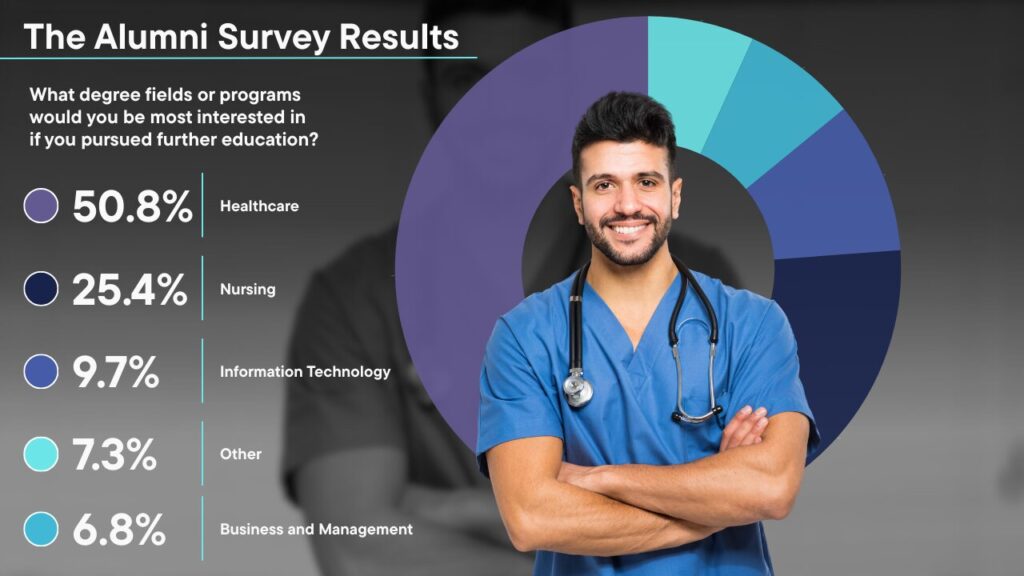
The degree fields or programs MedCerts graduates are most interested in pursuing further education is primarily around healthcare. 50.8% responded Healthcare as a general field, while 25.4% were interested in Nursing specifically. 9.7% of respondents are interested in education around Information Technology, while 6.8% are interested in pursuing a degree or program around Business and Management.
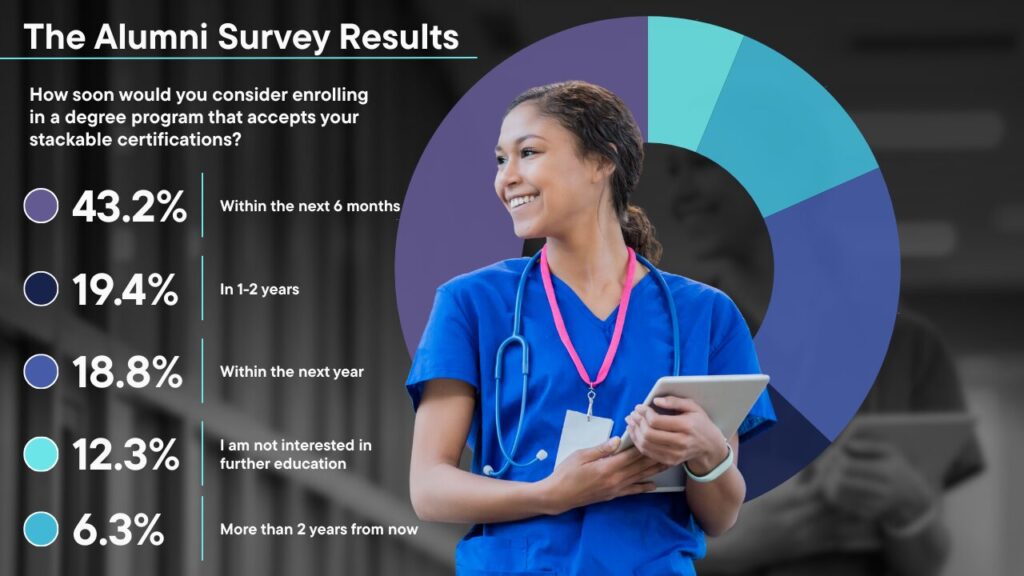
For MedCerts graduates, if they’re interested in enrolling in a degree program that accepts their stackable certifications, the timetable is now or in the near future. 43.2% of respondents said they’d consider enrolling within the next 6 months, while 18.8% said in the next year, and 19.4% responded within 1-2 years. Only 6.3% of MedCerts graduates wanted to wait more than two years from now to start a further education degree that builds on their MedCerts program.

382 former MedCerts students were asked the open-ended question, what are the challenges and opportunities you would consider when deciding to pursue a degree after completing your certification.
Without any multiple-choice answers to prompt them, 35.34% of respondents still brought up cost as a deciding issue. Convincing prospective students that they can actually afford higher education, when accurate, would remove a big stumbling block in pursuing a degree.
16.23% of respondents also cited a need for flexibility as a deciding factor in pursuing a degree. Many alumni brought up wanting either the option of online or hybrid classes, with juggling existing jobs, family commitments and transportation issues frequently mentioned as reasons for needing flexibility.
13.09% of alumni brought up time as a potential challenge in pursuing a degree. They’re worried about the length of time it would take to complete a degree. CPL initiatives help bridge that gap, shortening the time to receiving a degree, making it seem more attainable.
Conclusion
More than ever, prospective students are looking for value. According to a 2025 Gallup poll, only 18% of adults without a college degree feel 4 year college tuition is fairly priced. At the same time, the National Student Clearinghouse reports that while associate and bachelor’s degree completion rates have plateaued, they’re increasing for undergraduate credential completers.
Offering students who have completed their certification training credits for prior learning is an effective way to provide learners with more value and get them over the hurdle of committing to pursuing their degree.
Want more information about how your school can partner with MedCerts to co-create a Credit for Prior Learning program? Contact us todayat [email protected] to learn more!